
ÄR FASTIGHETSMARKNADEN PÅ VÄG MOT EN BUBBL

Is the Costa del Sol real estate market heading for a bubble? 2025 Analysis based on economic indicators & market Fundamentals Yes, property prices are growing higher and higher, but let’s be honest, we can’t base investment decisions purely on price trends. To truly understand if the market is sustainable and safe for investment, we need to look deeper at the fundamentals. The Costa del Sol, especially the Golden Triangle of Marbella, Estepona, and Benahavis, has seen remarkable growth over the last five years, especially in selective micromarkets. So, one of the most frequently asked questions among investors stands: Is the Costa del Sol real estate market heading for a bubble? To answer this, we compare today’s market with the conditions that caused Spain’s last bubble (1995-2007) and its crash (2008-2013). Understanding these warning signs is essential to determine whether current growth is healthy or overheating. What defines a real estate bubble? (Spain 1995-2007) Spain’s previous bubble was driven by a dangerous mix of cheap credit, speculativebuying and construction far beyond real demand. 1. Excessive credit growth Between 2000 and 2004, household mortgage debt in Spain increased at an extraordinary pace, rising around 20% per year according to the valuation company TINSA. By 2007, nearly 60% of all bank lending was for real estate (French Senat report, 2011), and banks routinely over-valued properties, sometimes by up to 29%, to grant higher loan-to-value mortgages (study by Martinez-Paeés & Maza, 2014). One of the clearest warning signs was the Credit Gap, which climbed to 47.3% above its long-term trend in 2007, according to the Bank for International Settlements (BIS). This indicator shows whether credit is growing unusually fast or slowly compared to the economy (GDP). At that time, credit was expanding far beyond sustainable levels, households and developers were accumulating excessive debt, and the system became highly vulnerable. When the credit gap grows excessively, the risk of a crisis increases sharply. 2. Low interest rates and risky mortgage structures Euribor fell to around 2.4% in 2006, which made borrowing extremely cheap and encouraged households to take on large mortgages (Euribor rates.eu). Almost all of those loans, 97.9%, were variable-rate (INE). This meant that when Euribor surged in 2007-2008, monthly payments suddenly increased for millions of households. As purchasing power fell, property demand dropped, and the market correction accelerated. 3. Massive construction oversupply During the bubble years, construction activity tripled, according to the European Central Bank. Spain was building far more homes than the population actually needed: nearly 3 million homes constructed after 2001 remained unsold. On the Costa del Sol, many coastal resort developments expanded rapidly to satisfy speculative buying rather than real residential demand. Prices in some coastal areas rose by around 250% between 1996 and 2007, forming an inflated and unstable market (TINSA). 4. GDP overdependence on construction By 2006, construction represented nearly 12% of Spain’s GDP (Trading Economics). The economy relied too heavily on construction instead of on productive, diversified industries. This dependence made the economy fragile; once construction slowed, the entire system weakened. 5. Local corruption and poor urban planning (Marbella) In Marbella, the years of Operacion Malaya revealed around 18,000 irregular properties built during a period of disorganised, speculative urban expansion (El Pais, 2021). Weak oversight and illegal building permits allowed uncontrolled construction, which artificially increased supply and contributed to overheating. Do we see these indicators today? (2025) The contrast with today could not be clearer: the main warning signs of the 1995-2007 bubble are simply not present in 2025. Below is the indicator-by-indicator comparison. 1. Credit growth: Healthy, not excessive Mortgage credit is growing at a moderate and sustainable pace. According to BIS data, the credit gap is currently negative, around -31% (Q1 2025), which means credit is expanding below its historical trend, indicating a more stable, and even restrictive, lending trend. Household debt stands at 43.5% of GDP, dramatically lower than the 84% recorded in 2009. There is no sign of households or developers accumulating dangerous levels of debt (see graph below). 2. Mortgage structure: much safer Even though variable-rate mortgages are gaining popularity again, the majority of borrowers now choose fixed-rate mortgages, around 63% in 2024, providing stability even during periods of fluctuating interest rates (see graph below) (INE). With Euribor stabilised around 2.2%, the environment is far more secure than during the previous bubble, when nearly all mortgages were variable-rate and households were exposed to sudden payment increases (Euribor rates.eu). 3. Supply vs demand: A shortage, not an oversupply Spain is currently creating approximately 240,000 new households per year, but only around 100,000 new homes are being built (Instituto Español de Analistas). Population is also 4.3 million higher than in 2007, pushing structural demand upward (Worldometer). On the Costa del Sol, land is limited, planning is strict, and development is controlled. Supply cannot expand fast enough to meet real demographic demand. This is the opposite of the pre-crisis years, when construction outpaced real need and speculation pushed prices higher. Today’s appreciation is driven by genuine supply shortages, not speculation. 4. GDP composition: A more balanced economy Construction now represents only about 5.3% of Spain’s GDP, less than half of what it did during the bubble (Observatorio Industrial de la Construccion). Today, growth is supported by a more diversified economy, which means housing demand is based on broader and more stable fundamentals rather than speculative forces, resulting in a healthier and more resilient market. 5. Regulatory environment: Much tougher and more controlled Urban planning, corruption monitoring and compliance have all strengthened significantly over the last decade. The abolition of the Golden Visa in 2025, stricter rules on short-term rentals, and tighter enforcement of planning regulations have created a more disciplined environment. Speculative or irregular development is far harder to execute today than in the mid-2000s. How about the luxury real estate market on the Costa del Sol? The luxury real estate market is very different from the general housing market. High-end properties tend to be more resilient because most buyers rely on cash
Fastighetsmarknadsrapport för Costa del Sol 2026: Prognoser, trender och investeringsmöjligheter

The Costa del Sol stands today as Europe’s most attractive property market for international investors. While economic uncertainty affects other regions, Southern Spain is experiencing a dynamic surge. Driven by Northern European buyers seeking long-term capital appreciation and an exceptional lifestyle, the market fundamentals here are stronger than ever. The data confirms a structural shift: demand consistently outpaces supply, and premium new-build developments often sell out before or shortly after launch. For early-stage investors, this creates a unique window of opportunity, with participation in new developments often yielding returns exceeding 80% during the construction period. In this 2026 Investor Report, we analyze the data behind this growth. We break down the comprehensive price evolution across 8 key areas, explore why the region faces a structural housing deficit , and provide detailed forecasts for the 2026–2028 period, where total price growth is projected to reach between +28% and +47%. Whether you are looking for a luxury villa in Marbella or a high-yield apartment in Málaga City, this report provides the essential insights you need to navigate the market. Why Costa del Sol is Europe’s Leading Property Market The Costa del Sol has solidified its position as Europe’s most attractive property market for international investors. While traditional markets fluctuate, this region offers a unique combination of long-term capital appreciation, solid rental yields, and an exceptional lifestyle that continues to draw Northern European buyers. However, the current market dynamic is driven by more than just lifestyle. Demand consistently outpaces supply, creating a competitive environment where new-build developments often sell out before or shortly after launch. This pressure creates unique opportunities for early-stage investors, with participation in new developments often yielding returns exceeding 80% during the construction period. This growth is supported by verifiable data: New Demographics: Beyond the traditional European market, there is a fast-growing segment of affluent buyers from the United States, further boosting the luxury and new-build segments. Supply vs. Demand: Understanding the Structural Imbalance To understand the price increases, investors must look at the structural imbalance defining the Spanish market. Spain currently faces a national housing deficit exceeding 700,000 homes, and the Costa del Sol represents the most supply-constrained coastal market in the country. The numbers illustrate a stark reality: This is not a temporary fluctuation; it is a structural imbalance that serves as the primary driver behind the exceptional capital appreciation observed in the region. For investors, this scarcity translates into security. Assets in prime locations are becoming increasingly rare. Price Evolution (2022–2025): A Look at the Numbers The following data focuses specifically on the New-Build Market (2022–2025), where the most significant gains have been recorded. The trajectory shows consistent double-digit or near double-digit growth, reflecting the intense demand for modern, high-quality inventory. Average Price per Square Metre (New-Build) Year Apartments (€/m²) Change Villas (€/m²) Change 2022 3,262 – 2,884 – 2023 3,524 +8.0% 3,144 +9.0% 2024 3,893 +10.5% 3,405 +8.3% 2025 4,323 +11.0% 3,760 +10.4% As the table demonstrates, apartment prices have surged by 11.0% in the last year alone, reaching an average of €4,323/m². This growth is a combination of market-driven price increases and the widening margins for developers in premium locations. Top 8 Strategic Areas to Invest in Costa del Sol (2026 Analysis) The Costa del Sol is not a monolith; it is a collection of distinct micro-markets, each offering unique advantages for different investor profiles. Based on historical price increases and infrastructure development, we have identified the 8 key areas driving the region’s growth. Here is a detailed breakdown of market positioning and price performance for each strategic location. 1. Málaga City: The Cultural & Technological Capital Once seen merely as a gateway to the coast, Málaga has transformed into a cultural, technological, and residential hub. The city now blends historical landmarks with a vibrant modern center, attracting a growing community of digital professionals. Price Evolution (New-Build) Year Price €/m² Growth 2022 2,768 – 2023 3,056 +10.4% 2024 3,558 +16.5% 2025 4,140 +16.4% 2. Marbella: The Global Icon of Luxury Marbella remains the undisputed leader in luxury, offering an unmatched lifestyle with world-class marinas, fine dining, and golf. Neighborhoods like the Golden Mile and Sierra Blanca represent the highest standard of design and investment security in the region. Price Evolution (New-Build) Year Price €/m² Growth 2022 4,150 – 2023 4,600 +10.8% 2024 5,350 +16.3% 2025 6,100+ +14.0% 3. Estepona: The “Garden of the Costa del Sol” Estepona is one of the fastest-growing municipalities, successfully blending Andalusian charm with modern coastal development. As prices in Marbella soar, buyers increasingly choose Estepona as a more accessible alternative that still offers rapid capital appreciation. Price Evolution (New-Build) Year Price €/m² Growth 2022 3,393 – 2023 3,608 +6.3% 2024 4,007 +11.1% 2025 4,376 +9.2% 4. Sotogrande: Exclusive Stability Located at the western end of the coast, Sotogrande is the most exclusive residential community in Southern Europe. Known for its polo fields, elite golf courses, and luxury marina, it is a market defined by high stability and low turnover. Price Evolution (New-Build) Year Price €/m² Growth 2022 7,500 – 2023 8,100 +8.0% 2024 8,450 +4.3% 2025 9,000+ +6.5% 5. Benahavís: Views & Gated Communities Benahavís offers a premium residential environment characterized by spectacular mountain and sea views. It is home to some of the most expensive zip codes in Spain, filled with luxury villas and high-end gated communities. Price Evolution (New-Build) Year Price €/m² Growth 2022 4,000 – 2023 4,300 +7.5% 2024 4,700 +9.3% 2025 5,200 +10.6% 6. Mijas: The Dual Market Mijas offers a unique dual opportunity. Mijas Pueblo provides a traditional, scenic, and peaceful village atmosphere, while La Cala de Mijas has become one of the most in-demand new-build markets on the coast. Price Evolution (New-Build): Year Price €/m² Growth 2022 3,130 – 2023 3,324 +6.2% 2024 3,630 +9.2% 2025 4,004 +10.3% 7. Fuengirola: High Demand & Low Risk Fuengirola is a vibrant coastal city with a stable year-round population and excellent international schools. It is a favorite for investors because it offers low-risk opportunities with consistent rental demand close to all amenities. Price Evolution (New-Build): Year Price €/m² Growth 2022 2,900 – 2023 3,200 +10.3% 2024 3,670 +14.7% 2025 4,200 +14.5% 8. Benalmádena: The Nordic Favorite Combining luxury marinas with family-friendly neighborhoods, Benalmádena boasts strong infrastructure and modern apartments.
Marbella East är tillbaka: Varför Río Real och Los Monteros är det smarta valet 2026
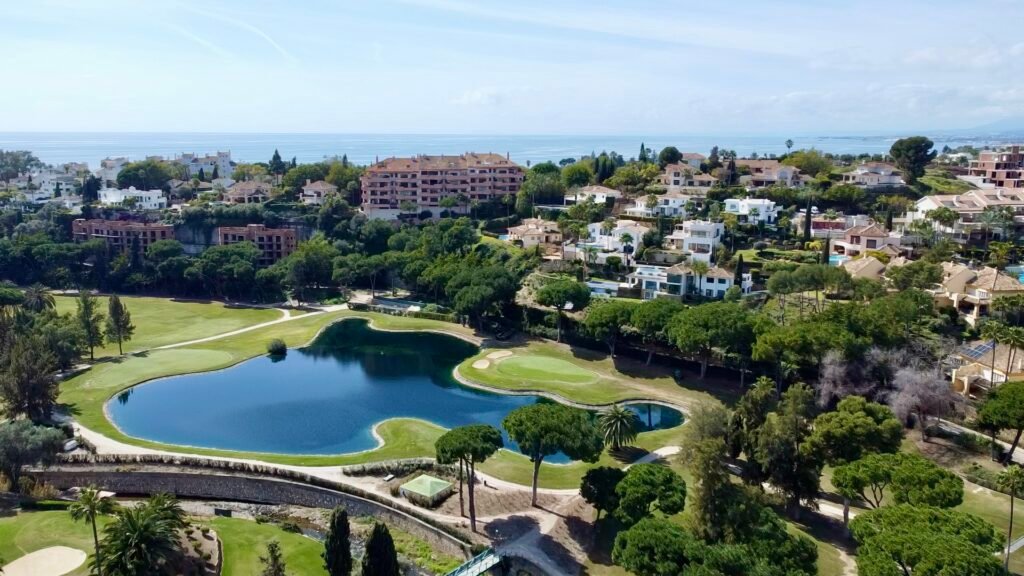
Om du förstår timing, tittar du redan på Marbella East. Internationellt kapital ompositionerar sig mot Río Real och Los Monteros, och detta är inte spekulativt. Det är strukturellt. Tre kraftfulla signaler samverkar inom samma korridor: Waldorf Astoria, Four Seasons och omvandlingen av Incosol, en traditionell hälsoanläggning som går in i en ny cykel med fokus på livslängd. Primär strandtomt är en bristvara. Mästerskapsgolf är en bristvara. Och när globala hotellkedjor och institutionellt kapital samlas kring båda dessa faktorer tolkar marknaden det som en långsiktig övertygelse – inte en trend. Det är precis den situation som Marbella East befinner sig i just nu: ikonisk strandtomt, etablerad golf och storskaliga projekt som omdefinierar efterfrågeprofilerna (långa vistelser, högkonsumerande turism, märkesbostäder, hälsoinriktad omlokalisering). De tre katalysatorerna som driver förändringen (Waldorf Astoria, Four Seasons, Incosol) 1) Waldorf Astoria (2029): Globalt varumärkesbekräftelse i Marbella East Hiltons ultralyxiga varumärke Waldorf Astoria kommer att öppna i Marbella 2029, med stöd av en annonserad investering på 220 miljoner euro från Higuerón Developments. Planen omfattar 120 hotellrum och 120 varumärkesbostäder, vilket positionerar destinationen i toppen av den internationella lyxkartan. Vad detta förändrar: globala varumärken bygger inte bara hotell – de omprissätter uppfattningen. Denna typ av tillkännagivande tenderar att driva på efterfrågan på de bästa tillgångarna i närheten (strand + golf + avskildhet). 2) Four Seasons: Ett avgörande administrativt steg som förändrar förväntningarna I februari 2026 godkände/främjade Marbellas kommunfullmäktige urbaniseringsarbeten för 9 miljoner euro för Four Seasons-projektet i El Pinar (Río Real) – ett viktigt steg som förflyttar projektet från ”länge diskuterat” till ”pågående”. Vad detta förändrar: när tillstånd och infrastruktur rör sig, slutar marknaden att prissätta osäkerhet och börjar prissätta sannolikhet. 3) Incosol: Ett anrikt wellness-varumärke som går in i en ny livslängdscykel Marbellas kommun beviljade tillstånd för renovering och utbyggnad av Hotel Incosol, med en angiven investering på 87,4 miljoner euro, vilket förvandlar det till ett femstjärnigt komplex med fokus på hälsa och livslängd. Vad detta förändrar: hälsa är inte längre ett ”tillägg” – det är en drivkraft för destinationen. Incosols ompositionering stöder efterfrågan året runt och lockar gäster som stannar länge, vilket vanligtvis stärker prisresiliensen i det omgivande området. Vad som gör Río Real och Los Monteros annorlunda (och investeringsbara) Río Real – Golfbaserat värde och närhet till Marbella centrum Los Monteros – Strandnära läge med långvarigt prestige Vem detta område passar bäst (livsstil + investering) Slutsatsen Detta är inte spekulativ tillväxt. Det är en strategisk konsolidering: golfanläggningar, globala varumärken och traditionell wellness samlas i östra Marbella – samtidigt som smart kapital redan är på plats. Om du överväger östra Marbella kan vi hjälpa dig att välja rätt mikroläge (Río Real vs. Los Monteros), bedöma uppsidan och genomföra fullständig juridisk och teknisk due diligence, så att du kan gå vidare med säkerhet.